The Nightstand Buying Guide: 10 Things to Check Before You Buy
A nightstand does more work than almost any piece of bedroom furniture — it holds your lamp, your phone, your book, your water, and the clutter you hide when guests peek in. Buy wrong and you’ll bump your head reaching past it, fumble for the lamp in the dark, or stare at a drawer that never quite closes. Here are 10 things to check before you bring one home.
1. Get the Height Right
The golden rule: your nightstand top should sit roughly level with the top of your mattress — within a couple of inches either way. Too low and you crane your neck to reach your book; too high and the lamp looms over you. Measure from the floor to the top of your mattress before you shop, and compare it to the product’s listed height.
2. Measure Your Space, Not Just the Nightstand
Measure the gap between your bed and the wall (or door swing) first. A standard nightstand is roughly 18–24 inches wide, but tight rooms may need a narrow 12–16 inch model, and spacious rooms can handle a wider piece with more surface. Leave enough room to walk past comfortably — at least 24 inches of clearance from the bed’s edge is a good target in a walk-around layout.
3. Match Your Storage Style to Your Habits
Drawers hide clutter and keep dust off your things. Open shelves keep your current book, glasses, and charger within instant reach. A drawer-over-shelf combo is the sweet spot for most people. Be honest about your habits: if your nightstand collects chaos, drawers will make the room look calmer.
4. Check Drawer Quality, Not Just Drawer Count
Open and close every drawer in the store (or read reviews about the glides online). Drawers should slide smoothly and stay level when pulled out. Solid wood drawer boxes outlast stapled particle-board ones, and full-extension glides let you reach the back without fishing around.
5. Look for Cable Management
Phones charge overnight, which means cables. Nightstands with a hole or slot in the back panel let cords pass through to an outlet behind the piece instead of draping across the top. If the model you love lacks one, a small adhesive cable clip on the back edge does the same job.
6. Understand the Materials
Solid wood costs more and lasts for decades, developing character over time. Veneer over engineered wood (MDF or plywood) looks just as good, resists warping, and costs noticeably less — it’s the sensible choice for most budgets. Painted finishes hide wear well; clear-stained wood shows grain beautifully but reveals scratches more. Match the material to your price expectations (prices vary widely — check current listings).
7. Plan Your Lamp Clearance
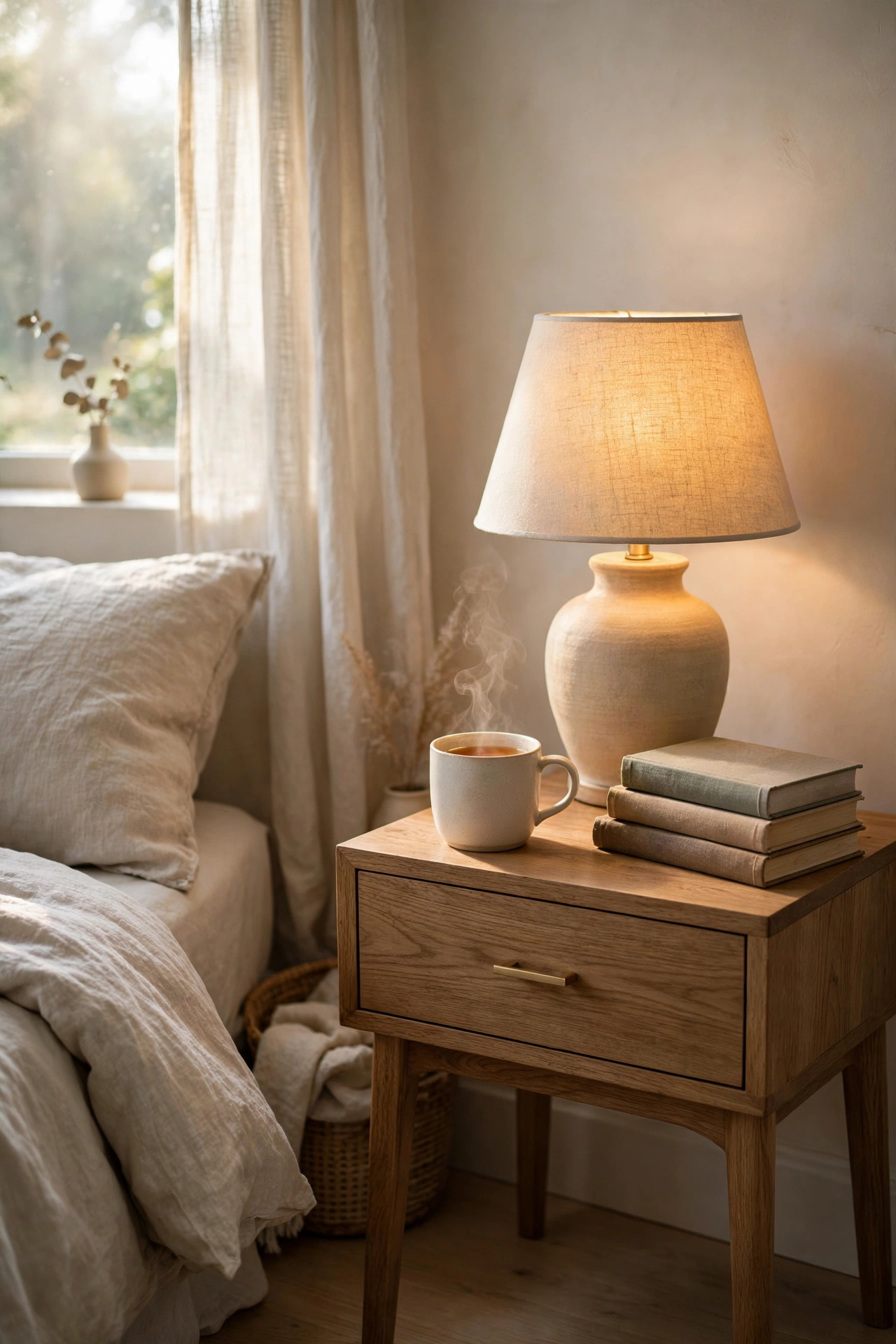
Your lamp and nightstand are a team. As a practical rule, the bottom of the lampshade should sit roughly at your eye level when you’re sitting up in bed — high enough to cast light over your book, low enough not to glare in your eyes. A too-tall lamp on a too-tall nightstand is the most common bedroom lighting mistake.
8. One or Two? Match Your Room, Not the Set
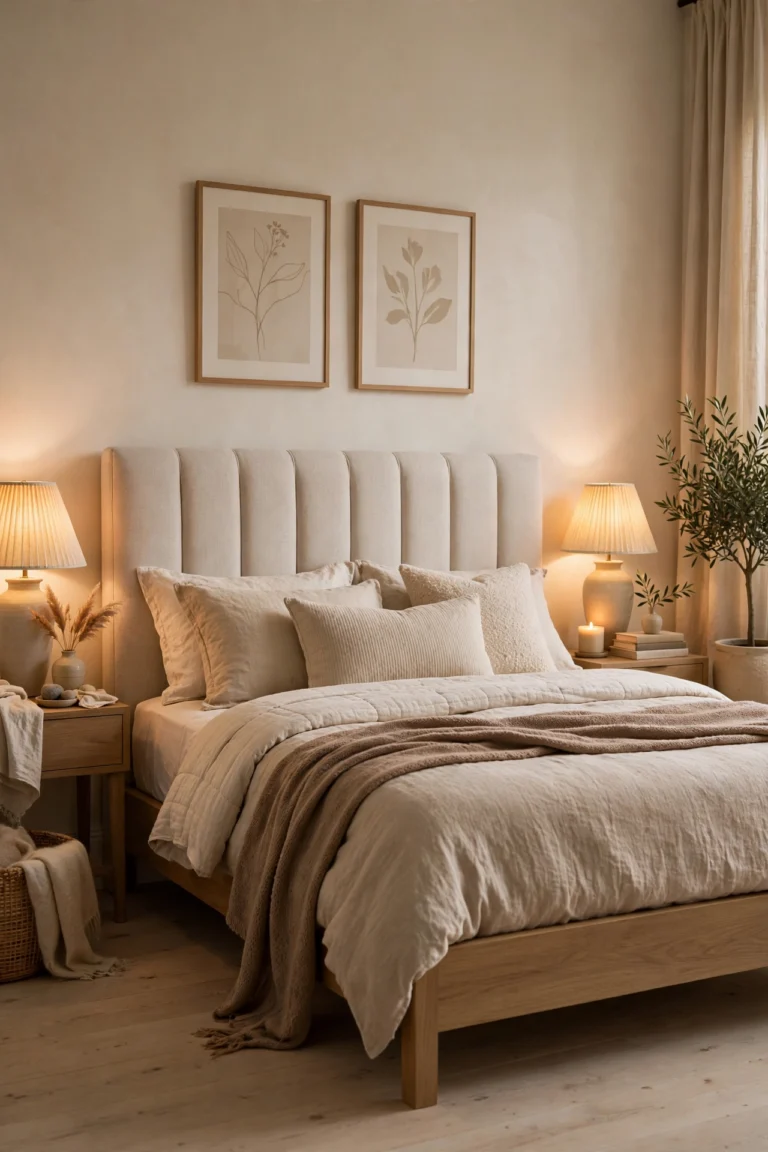
Bedroom sets sell pairs, but you don’t have to buy both — or match at all. Two different nightstands that share a wood tone or finish look intentionally curated rather than showroom-matched. If only one side of the bed has space, a single nightstand plus a small wall shelf on the other side works beautifully.
9. Test Stability
A nightstand holds a heavy lamp and gets yanked by its drawers daily. Press down on the front edge and wiggle it side to side — it should feel rock solid, not wobbly. Four solid legs or a full plinth base beat spindly decorative legs for real-world stability.
10. Check the Return Policy and Delivery Details
Furniture looks different in your room than in a photo. Buy from somewhere with a reasonable return window, and confirm whether delivery includes carrying it upstairs — a “curbside only” delivery of a heavy piece is an unpleasant surprise. Measure your doorways and stairwells too, so the piece actually fits on the way in.
The Short Version
Measure your mattress height and your wall gap, pick storage that matches your habits, prioritize smooth drawers and solid stability, and pair it with a lamp at the right height. Get those right and your nightstand quietly makes every night and morning a little easier.