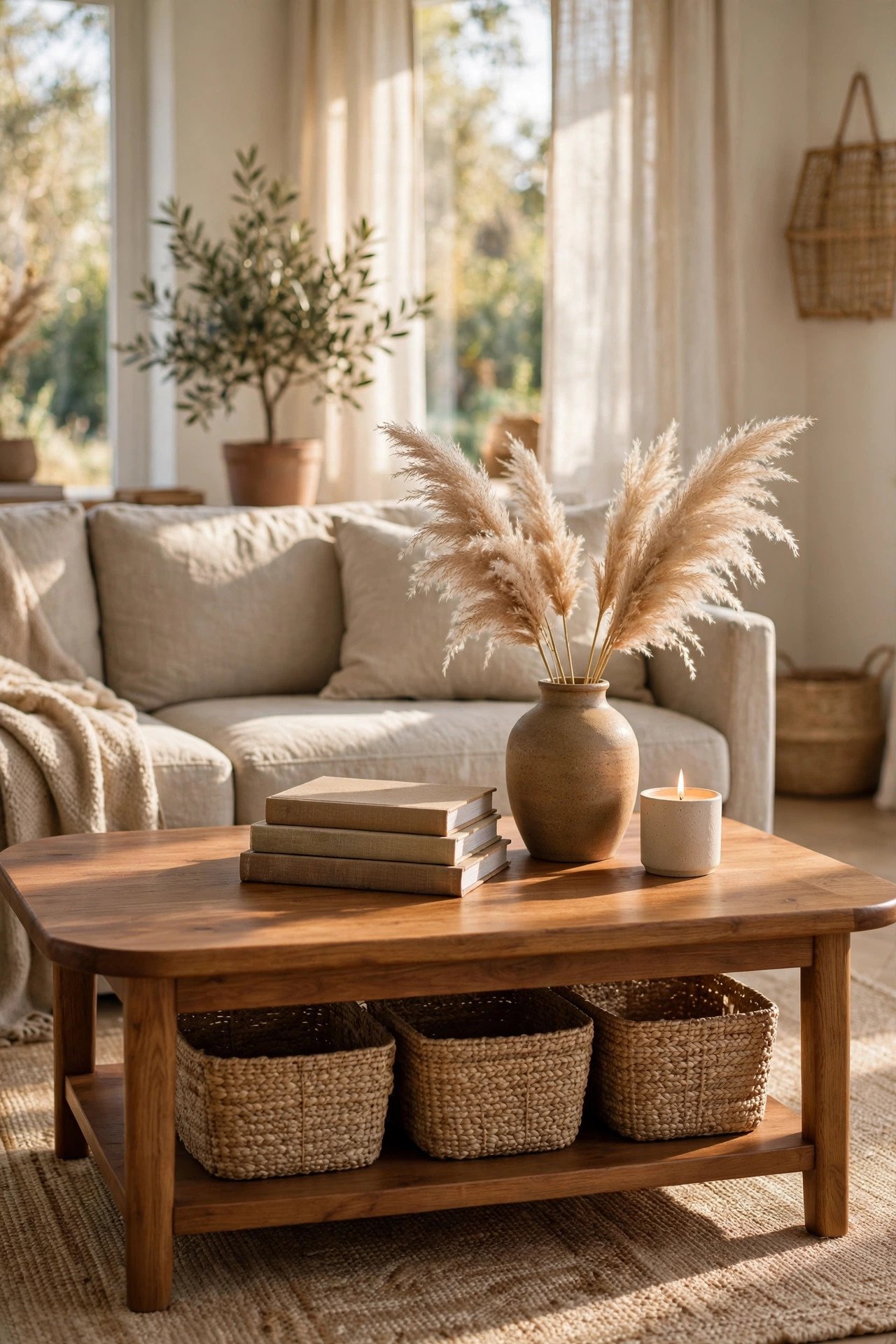
The Coffee Table Buying Guide: 10 Things to Check Before You Buy
The coffee table is the anchor of your living room — the piece everything else orbits. Get it right and the whole room clicks; get it wrong and even a beautiful sofa looks off. Before you buy, run through these 10 checks.
1. Height: match your sofa seat
Aim for a coffee table that’s roughly the same height as your sofa’s seat cushions, or within an inch or two. Too tall and it towers over the seating; too low and you’ll strain to reach your coffee. If you can’t measure in store, check the listed dimensions online before ordering.
2. Length: about two-thirds of your sofa
A good rule of thumb: your coffee table should be roughly two-thirds the length of your sofa. A table that’s too short looks lost in front of a long sofa; one that’s too long crowds the room and blocks the walkway.
3. Clearance: leave room to move
Leave around 16–18 inches between the coffee table and the sofa — enough to sit comfortably and swing your legs around. And keep 30 inches or more of walkway clearance on the sides people actually pass through.
4. Shape: let the room decide
Round or oval tables are kind to small rooms and tight traffic paths — no sharp corners to bump into, and they visually take up less space. Rectangular tables suit long sofas and larger rooms. Square tables work best with sectional or L-shaped seating.
5. Material: match it to your life, not just your style
Solid wood is warm, forgiving, and ages well — but it scratches, so it’s a poor pick if you eat dinner off it nightly without coasters or a tray. Glass looks light and airy in small rooms but shows every fingerprint. Stone and marble are stunning and heavy (think twice about moving day). Metal frames are sturdy and slim-profiled. Pick for your real life first.
6. Storage: decide how hard it should work
If your living room doubles as the everything room, storage is gold: lift-top tables hide laptops and remotes, drawers swallow chargers, and a lower shelf holds baskets for throws and magazines. If you already have plenty of storage, a simple open design keeps the room feeling light.
7. Kids and pets: round the corners
With toddlers or large dogs, prioritize rounded corners, a stable base that won’t tip, and materials that survive bumps — solid wood and upholstered ottomans beat glass every time. You can always upgrade to the dream table later; safety now.
8. Style: coordinate, don’t match
Resist the urge to buy the whole matching living room set. A coffee table that echoes your room’s wood tones or metal finishes — without being identical — looks far more designer. Mixing a warm wood table with a linen sofa and brass lamp reads collected and intentional.
9. Weight: think about moving day (and vacuuming)
Stone, concrete, and solid hardwood tables can weigh a hundred pounds or more — fine if it lives in one spot forever, miserable if you rearrange seasonally. If you like to refresh your layout, choose something two people can lift comfortably.
10. Budget: know the ranges
Coffee table prices vary widely, so set your band before you shop — and check current listings, since prices shift with sales and seasons. As a rough guide: budget-friendly finds typically run under $150, solid mid-range tables land around $200–$500, and designer or solid-stone pieces climb from $800 upward. The sweet spot for most living rooms is the middle band: real wood, sturdy joinery, and a design you’ll still like in five years.
The bottom line
Measure twice, buy once. Height, length, and clearance are the unglamorous numbers that decide whether a coffee table works — style is just the finishing touch. Get the proportions right and almost any table you love will look like it was made for your room.