The Sectional Sofa Buying Guide: 10 Things to Check Before You Bring One Home
A sectional sofa is one of the biggest furniture purchases most people make — it anchors the living room, seats the whole family, and often costs more than any other single piece in the house. Sectionals typically range from a few hundred dollars for budget models to several thousand for premium or custom pieces (prices vary — check current listings). Because it is a big investment, it pays to shop carefully. Here is what to check before you buy.
1. Measure the room — and the route in
Before falling in love with any sofa, measure your living room: the wall where the sectional will sit, plus at least 30 inches of walkway around the pieces you walk past. Then measure everything the sofa must travel through on delivery day — doorways, hallways, stairwells, and tight turns. Many sectionals ship in two or more pieces, which helps, but a long chaise section can still refuse to turn a corner. When in doubt, bring the measurements to the store or check the product dimensions against your narrowest doorway.
2. Pick the right orientation
Sectionals come in L-shapes, U-shapes, and modular layouts. The “left-facing” or “right-facing” label for a chaise is defined by how it looks when you sit on it and face forward — not how it looks from across the room. Stand where the sofa will go, imagine sitting in it, and note which side the chaise belongs on. Tape the footprint on your floor with painter’s tape to see how it fits before you commit.
3. Decide on modular vs. fixed
Modular sectionals are made of individual seats you can rearrange — handy if you move often, host movie nights, or like to refresh the layout. Fixed sectionals usually cost less for the same size and have a cleaner, more tailored look. If your household includes kids or pets who roughhouse on the couch, note that modular pieces can drift apart over time unless they have sturdy connector clips.
4. Test the seat depth and height
Seat depth changes how a sofa feels more than almost anything else. Deep seats (around 24 inches or more) are made for lounging and curling up; shallower seats suit upright sitting and smaller rooms. If you can, sit on the exact model — or at least one with the same frame — before buying. Taller or older family members may prefer a higher seat that is easier to get up from.
5. Choose upholstery for your real life
With kids or pets, look for tightly woven, darker or patterned fabrics that hide wear, and consider removable, washable covers. Performance fabrics resist stains better than basic cotton or linen weaves. Leather wipes clean easily and ages well, but it can feel cold in winter and sticky in summer, and quality leather costs more. Velvet looks luxurious and hides minor marks surprisingly well, though it needs occasional brushing to keep the nap even.
6. Check the frame and suspension
The frame is what determines whether a sectional lasts five years or fifteen. Kiln-dried hardwood frames are the sturdiest choice; avoid frames made mostly of particleboard for a daily-use sofa. For suspension, sinuous springs and eight-way hand-tied springs both provide good support — what matters most is that the seat feels firm and even when you sit, with no sagging spots or creaking.
7. Ask about the cushions
Cushion fill affects both comfort and maintenance. High-density foam holds its shape well and suits people who like support; down or down-blend cushions feel softer and more relaxed but need regular fluffing to keep their shape. Many mid-range sectionals use a foam core wrapped in fiber or down alternative — a good compromise. Ask whether cushion covers are removable and washable before you buy.
8. Think about delivery, assembly, and returns
Confirm whether delivery includes bringing the pieces inside (threshold delivery often stops at the door) and whether old-sofa removal is offered. Ask who assembles it and what tools are needed. Most importantly, read the return policy: many furniture retailers charge restocking fees or only allow exchanges, and custom-order sectionals are frequently final sale. A generous return window is worth a lot on a purchase this size.
9. Plan for sunlight
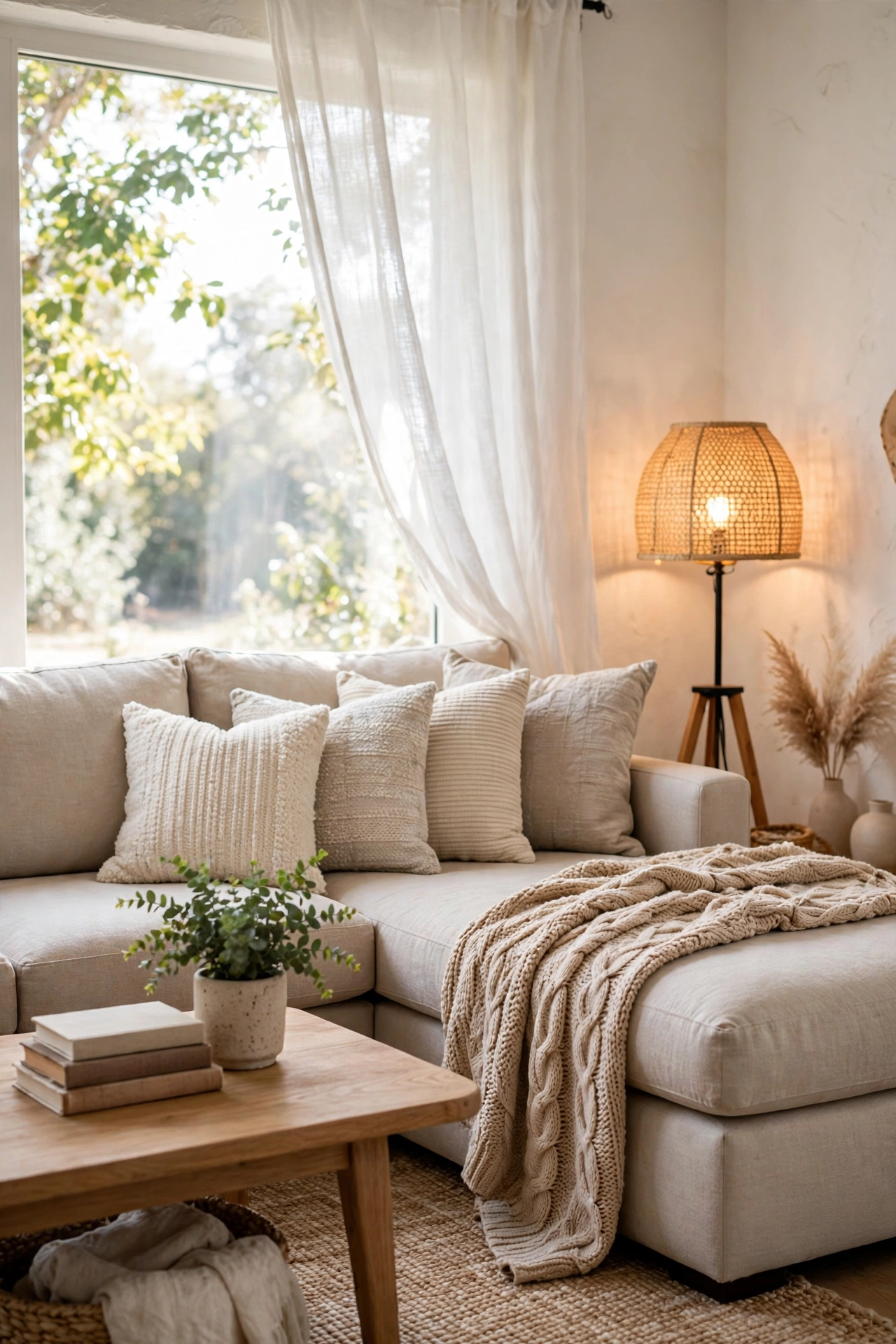
Direct afternoon sun fades upholstery over time — darker fabrics and leather show it first. If your sectional will sit near a big window, plan for sheer curtains or UV-filtering window film, and rotate loose cushions periodically so fading stays even. This is a small habit that keeps a big purchase looking new for years.
10. Budget for the whole setup
The sofa is only part of the cost. A rug large enough to anchor a sectional, extra throw pillows, a throw blanket, and possibly a new coffee table or floor lamp sized to the bigger seating area can add several hundred dollars. Set your total budget first, then shop for the sofa within what remains — the room will look finished instead of half-done.
A sectional is a long-term relationship. Measure twice, sit on it if you can, choose fabric for the life you actually live, and read the fine print on delivery and returns. Do that, and the biggest seat in the house will also be the coziest one.