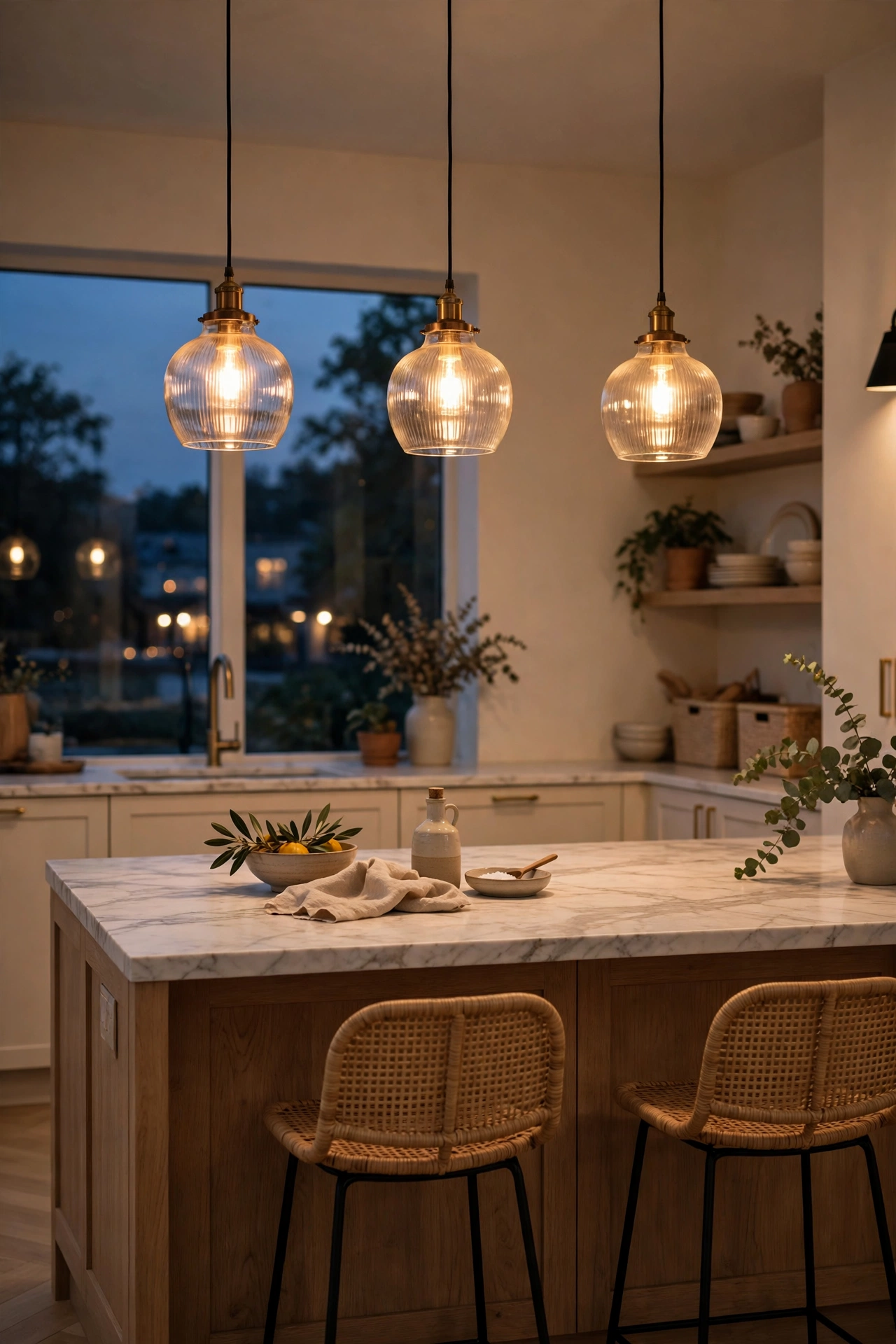
The Pendant Light Buying Guide: 10 Things to Check Before You Hang One
Pendant lights are the jewelry of a room — small fixtures that change the whole look of a kitchen island, dining table, or reading corner. But pick the wrong size or hang it at the wrong height and the effect falls flat. Here’s what to check before you buy.
1. Get the Size Right for Your Space
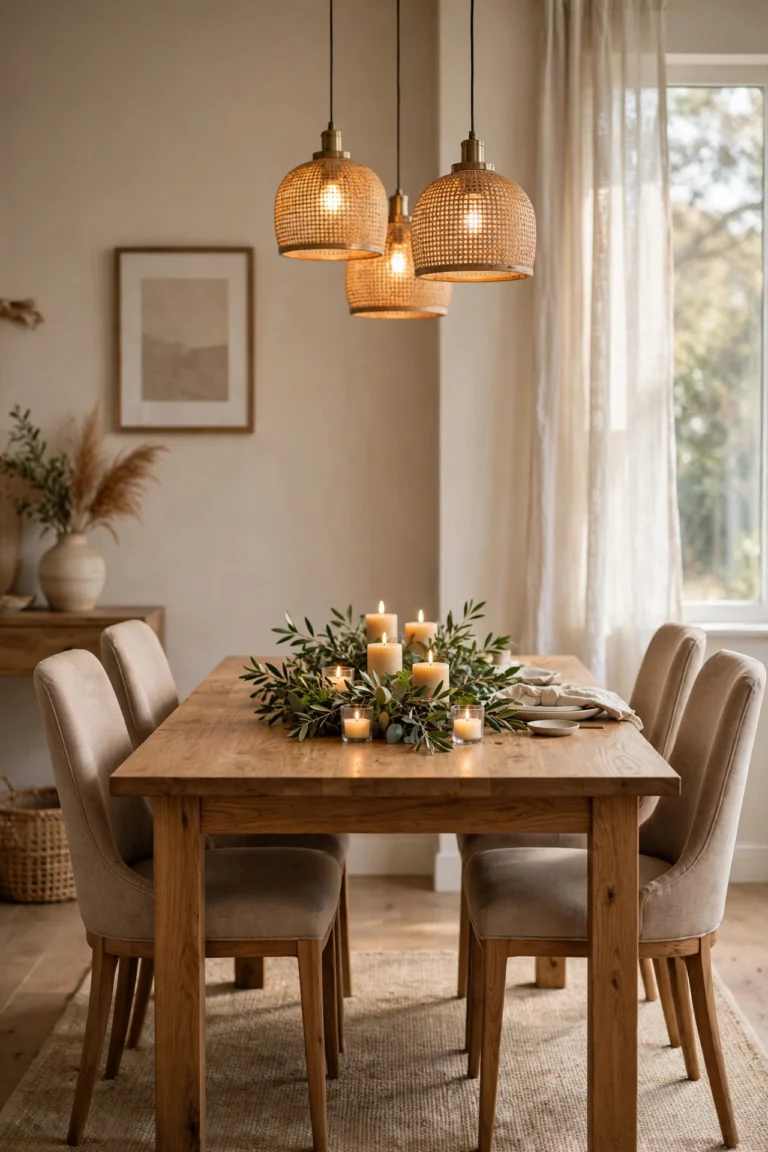
A common rule of thumb: a pendant’s diameter should be roughly one-half to two-thirds the width of the surface it hangs over. One large pendant makes a bolder statement; a row of two or three smaller pendants works better over long islands.
2. Know Your Hanging Height
Pendants over a dining table or kitchen island typically hang about 28–36 inches above the surface — low enough to feel intimate, high enough to see across. Over a kitchen counter where people stand, lean toward the higher end. For open floor areas, keep the bottom of the fixture at least 7 feet off the floor.
3. Check the Bulb Base and Bulb Type
Confirm the socket type (E26/E27 is the most common household base in the US) and whether bulbs are included. LED-compatible fixtures are the smart pick — they run cooler, last for years, and cut energy use compared to old incandescent bulbs.
4. Look at Lumens, Not Just Watts
Watts measure energy use; lumens measure brightness. A pendant for task lighting over an island wants noticeably more lumens than one that’s purely decorative in a corner. Check the recommended lumen range on the product page and match it to your room’s needs. (Products vary — check current listings.)
5. Decide: Hardwired or Plug-In?
Hardwired pendants need a junction box and, for most people, an electrician — but they look clean and permanent. Plug-in pendants with a swag cord hang from a hook and plug into a wall outlet, making them renter-friendly and DIY-able.
6. Match Your Finish to Your Hardware
Pick a pendant finish that echoes something else in the room — faucet and cabinet hardware in a kitchen, curtain rods or frames in a living room. Matching undertones (warm brass with warm wood, matte black with black fixtures) is what makes a room feel designed rather than decorated.
7. Check Dimmer Compatibility
If you want dimming — and you almost certainly do for a dining area — check that both the fixture and the bulbs are marked dimmable, and that your dimmer switch is rated for LED bulbs. Mismatched dimmers are the number one cause of flickering.
8. Consider the Cord and Canopy
The hanging cord, chain, and ceiling canopy are part of the look. Fabric cords feel vintage-cozy; metal rods read modern and clean. Make sure the cord is long enough for your ceiling — high ceilings often need an extra-long cord or extension rods.
9. Mind the Shade Direction
Open-bottom pendants throw light downward — great for task lighting over counters. Glass or open-top designs spill light upward too, which softens a room. Solid shades focus the glow and protect your eyes from bare bulbs.
10. Buy One to Test Before Committing to Three
If you’re outfitting an island with a matching row, buy a single pendant first. Hang it temporarily and check the scale, brightness, and color in your actual light. Returning one fixture is easy; returning three is a project.
The Bottom Line
The right pendant is the right size, at the right height, with dimmable LED bulbs and a finish that ties the room together. Get those four things right and you’ll wonder how the room ever looked finished without it.