Bookshelf Styling: 9 Cozy Rules That Work in Any Room
A well-styled bookshelf is the difference between a room that feels finished and one that feels… almost there. Whether it’s a tall bookcase in the living room, open kitchen shelves, or a hallway nook, the same nine rules make shelves look effortlessly cozy — styled, not stuffed.
Rule 1: Clear First, Style Second
Pull everything off the shelf before you start. Every time. Styling around existing clutter never works. Wipe the shelves down and only bring back what earns its place: books you love, objects with a story, and a few decorative pieces. If it doesn’t make you happy to look at, it doesn’t go back.
Rule 2: Mix Vertical and Horizontal Stacks
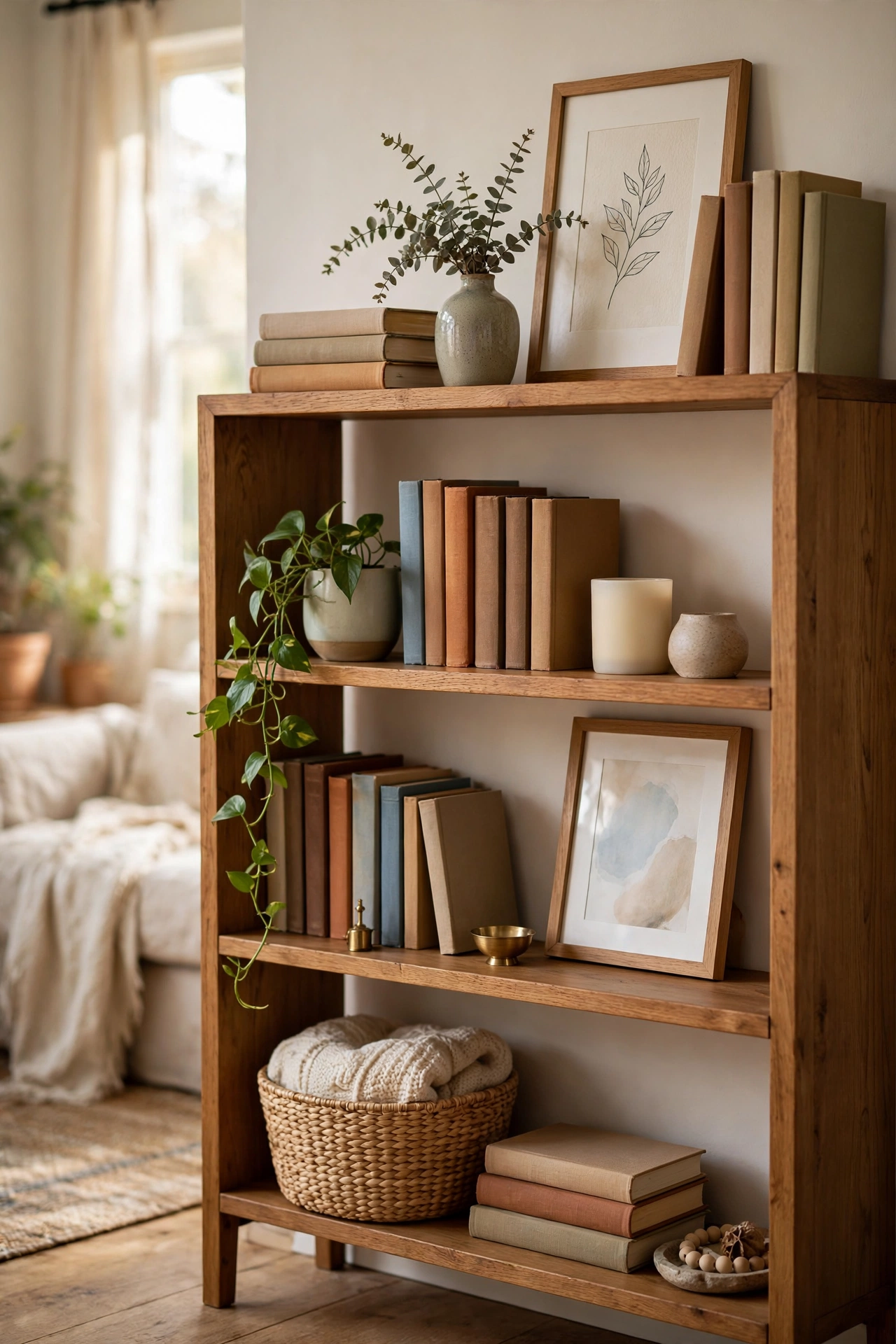
Books standing straight in a row are fine — on every shelf they get monotonous. Mix it up: one shelf of vertical books, one shelf with a horizontal stack of three to five books, topped with a small plant or candle. Horizontal stacks create “platforms” for decor and give the eye places to rest.
Rule 3: Follow the Two-Thirds Rule
Fill roughly two-thirds of each shelf and leave one-third breathing room. Overstuffed shelves feel chaotic; sparse ones feel unfinished. Breathing room is what separates a styled shelf from storage. If a shelf feels crowded, remove three things and reassess — less is almost always the answer.
Rule 4: Layer in Threes
The magic number in styling is three. Group objects in odd numbers: a candle, a small vase, and a framed photo. A stack of books, a plant, and a decorative bowl. Trios feel natural and balanced while pairs can feel stiff. Vary the heights within each group for visual interest.
Rule 5: Add Something Living
Every shelf needs one living thing — a trailing pothos, a small fern, a sprig of eucalyptus in a bud vase. Plants bring movement and warmth that no object can match, and they soften the hard lines of a bookcase. No green thumb? Good faux stems or a small bowl of dried grasses work beautifully.
Rule 6: Play With Depth
Push some books to the back of the shelf, pull others forward. Place a small framed print or lean art against the back of the shelf, then set a stack of books in front of it. This front-to-back layering creates depth and makes a flat bookcase feel rich and dimensional instead of one-note.
Rule 7: Repeat Colors, Not Objects
Cohesion comes from a limited color palette, not matching sets. Pick two or three colors — warm neutrals plus one accent — and echo them across the shelves: a rust-colored book spine here, a terracotta vase there, a copper frame on another shelf. Turn the loudest, clashing book spines inward if needed.
Rule 8: Use Baskets and Boxes Strategically
The bottom shelf is prime real estate for a woven basket or wooden box. It hides the clutter you can’t style away — remotes, chargers, dog leashes — and adds natural texture. One or two baskets max; more than that and the shelf starts looking like a storage unit.
Rule 9: Step Back and Edit
The final rule is the most important: style, then walk away for ten minutes. Come back and remove one thing from each shelf. This last edit is where professional stylists earn their fee — the shelf always looks better slightly emptier than you think. Photograph it from the doorway; the camera reveals clutter your eyes miss.
Conclusion
Bookshelf styling isn’t about having the right objects — it’s about how you arrange what you already own. Clear, mix, leave breathing room, layer in threes, add something living, and edit ruthlessly at the end. These nine rules work on a living room bookcase, kitchen open shelves, or a bathroom ledge, and they cost nothing but a little time. Your shelves are about to become your favorite part of the room.