Gallery Wall Secrets: 10 Rules for Wall Art That Actually Looks Good
Blank walls are the number-one reason homes feel unfinished. A gallery wall is the fastest fix — but the difference between “curated” and “cluttered” comes down to a few simple rules. Here are the 10 that designers swear by.
1. Start with an anchor piece
Every great gallery wall has one hero — the largest piece, hung first, usually at eye level. Everything else orbits it. Without an anchor, the wall looks scattered no matter how pretty the individual frames are.
2. Plan on the floor first
Lay the arrangement on the floor, or tape paper templates to the wall, before a single nail goes in. Photograph it. Live with it for a day. This one step prevents ninety percent of gallery wall regret.
3. Keep spacing consistent
Two to three inches between frames, everywhere. Consistent gaps are the invisible grid that makes mixed frames look intentional instead of random. A ruler and a level are your best friends here.
4. Mix frames, not chaos
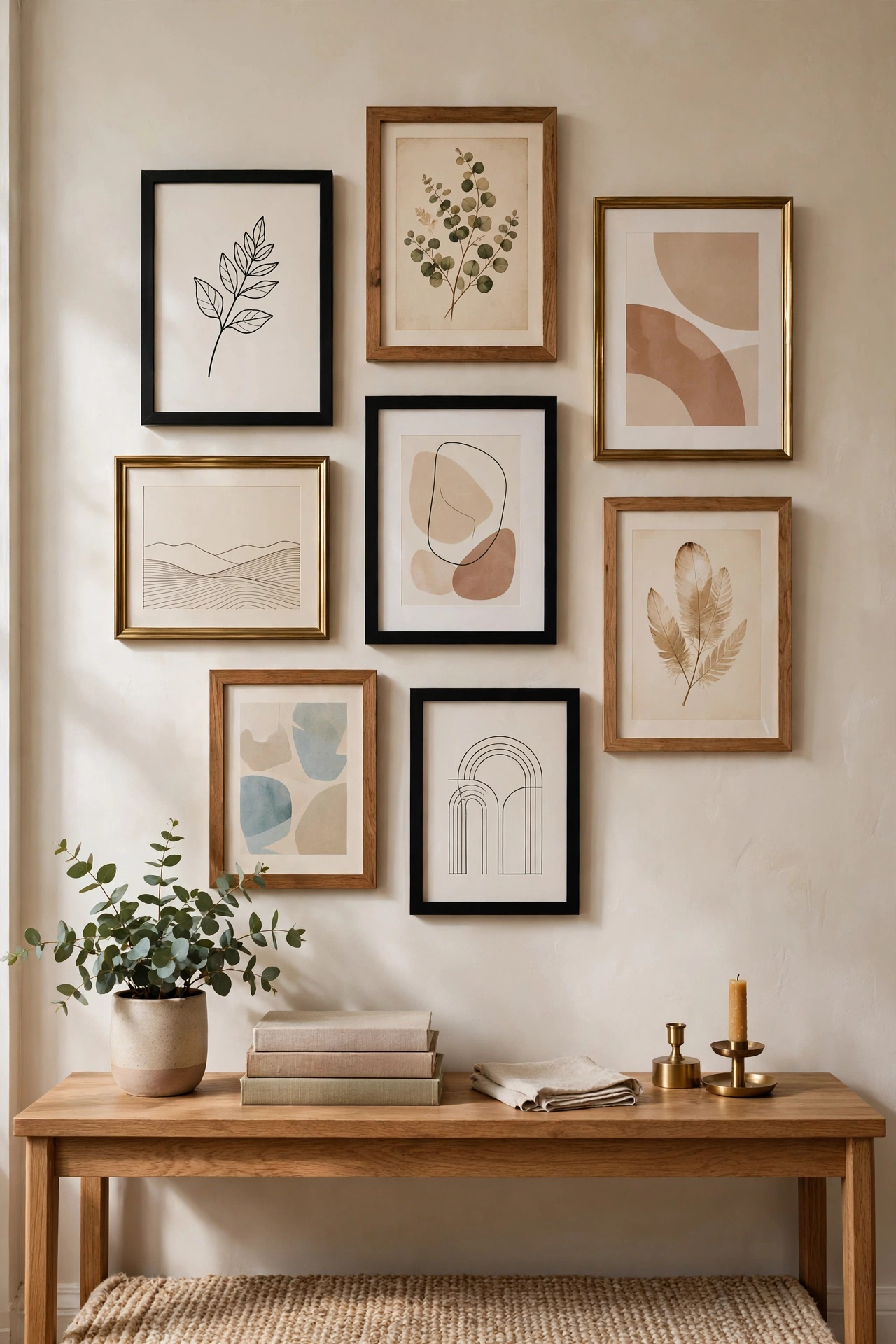
Black, white, wood, brass — mixing frame styles is absolutely fine, but pick a limited palette (two or three finishes) and repeat each at least twice. Repetition is what reads as “curated.”
5. Vary sizes, not just styles
Include at least one oversized piece and a few small ones. Uniform sizes look like a grid — fine, if that’s the goal — but varied sizes feel collected and personal, like a wall that grew over time.
6. Include something that’s not a frame
A small mirror, a wall basket, a set of brass hooks, a floating shelf with a trailing plant — one non-framed element breaks the monotony and adds dimension. Gallery walls that are only frames can feel flat.
7. Mind the center line
Hang the center of the arrangement at eye level — about 57 inches from the floor. For walls above sofas, the bottom of the lowest frame should sit six to eight inches above the furniture. Art hung too high is the most common mistake in every home.
8. Use what you love, not what’s trendy
The best gallery walls are personal: kids’ art, travel photos, a flea-market find, that print you couldn’t leave behind. If everything came from the same store in the same week, it will look like it. Your wall should tell your story.
9. Affordable art sources that look expensive
Original art doesn’t require a gallery budget. Try: thrifted frames with free printable art inside, fabric swatches mounted in frames, pages from old illustrated books, your own photos printed large in black and white, or pressed botanicals from the garden. A three-dollar thrift frame plus a free download equals art that looks like two hundred dollars.
10. Let it evolve
A gallery wall is never “done.” Leave one empty spot on purpose — it gives you permission to add the next treasure you find. The best walls grow over years, not weekends, and they get more interesting with every addition.
The secret nobody tells you: confidence matters more than rules. Measure twice, hang once, and if you love every piece on that wall, no one will notice the one frame that’s half an inch off. Start with your anchor piece this weekend — your blank wall is waiting.