Luxury Look, Budget Price: 16 Living Room Ideas That Fool Everyone
Everyone has walked into a room that just feels expensive — the kind of living room that looks like it belongs in a magazine. Here’s the secret nobody tells you: that feeling rarely comes from how much was spent. It comes from a handful of deliberate choices about light, texture, scale, and editing. Prices below are approximate ranges to help you plan — prices vary by store and season, so check current listings before you buy.
1. Paint One Wall (or All of Them) in a Rich Neutral
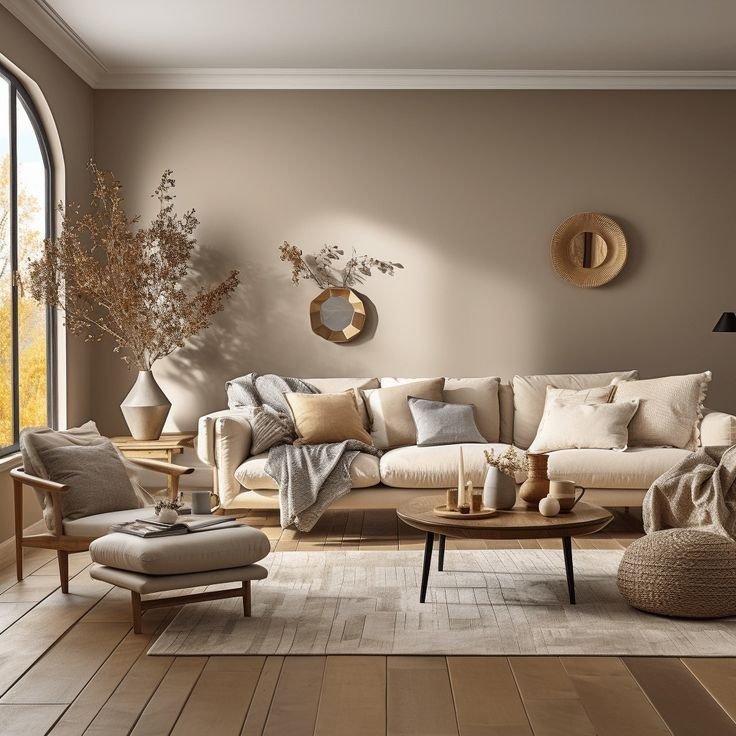
Nothing makes a room feel expensive faster than a considered paint color. Warm whites, greige, deep olive, or a moody charcoal can transform a room for roughly $30–$60 of paint plus supplies. Test a swatch on the wall first and look at it in daylight and lamplight before committing.
2. Hang Curtains High and Wide
Mount curtain rods 4–6 inches above the window frame and extend them past the sides so the panels just kiss the floor. This one trick makes windows look taller and ceilings higher — the oldest “designer” trick in the book. Budget curtain panels can cost roughly $15–$40 per pair; the look is all in the placement.
3. Add One Velvet or Linen Touch
Luxury is tactile. A single velvet throw pillow, a linen lumbar cushion, or a soft throw in a rich color (rust, forest, cognac) adds instant depth. One or two textured pieces are enough; cover every surface and the effect flattens.
4. Buy the Big Rug, Not the Pretty Small One
An undersized rug is the fastest way to make a room feel cheap. As a rule of thumb, the front legs of your sofa and chairs should sit on the rug. Large area rugs in budget materials start around $60–$150 for an 8×10 — measure your space first, because a rug that’s too small reads as an afterthought.
5. One Brass or Gold Accent
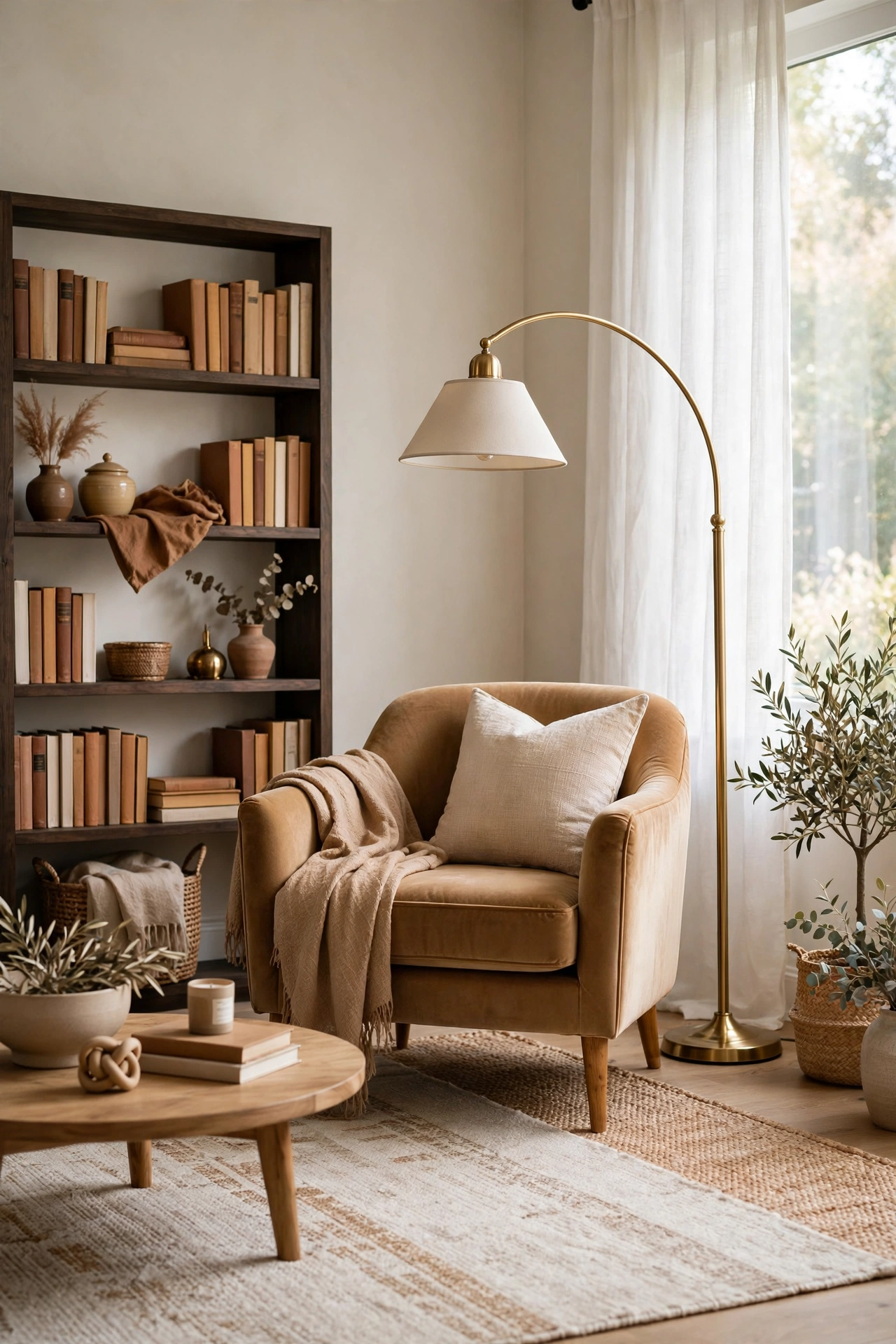
A brass floor lamp, a gold-framed mirror, or brushed-gold drawer pulls catch the light and read as jewelry for the room. Pick one finish and repeat it twice at most — scattered mixed metals look busy.
6. Style the Coffee Table in Threes
Group items in odd numbers: a small stack of books, a candle, and a small plant or bowl. Trays are the unsung hero here — a $10–$20 tray turns random objects into a composed vignette.
7. Go Symmetrical on the Sofa
Matching pillows mirrored on each side of the sofa is a hotel-lobby trick that signals order and intention. Stick to a simple formula: two 20-inch squares in a solid, two 18-inch in a pattern, one lumbar in front.
8. Bring in Real Greenery
A real plant in a ceramic or terracotta pot beats any silk plant, and it’s cheaper. A snake plant or pothos (roughly $10–$25) is forgiving if you forget to water, and the pot matters more than the plant for the look.
9. Swap in Warm Light Bulbs
Expensive-looking rooms glow. Replace cool white bulbs with warm white (around 2700K) and add a second light source — a floor lamp or table lamp — so no single overhead fixture does all the work. Lamps themselves can be thrifted and updated with a new shade.
10. Frame Art Big
One large framed print has more impact than five small ones. Frame a free high-resolution public-domain artwork or a favorite photo in a simple frame — going big on one piece makes walls feel curated rather than decorated.
11. Hide the Clutter in Pretty Containers
Nothing says “expensive” like a room where everything has a home. Woven baskets, lidded boxes, and ottomans with storage (roughly $20–$50) swallow remotes, blankets, and chargers so surfaces stay calm.
12. Add a Floor Lamp With Presence
A tall arc or pharmacy-style floor lamp draws the eye upward and adds architectural interest. Secondhand stores often have solid brass or black lamps for under $30 — a new linen shade finishes the upgrade.
13. Use a Mirror to Borrow Light
A well-placed mirror across from a window doubles the daylight and makes the room feel larger. Leaning a large mirror against a wall is a stylist move that costs nothing extra once you have the piece.
14. Edit the Bookshelf
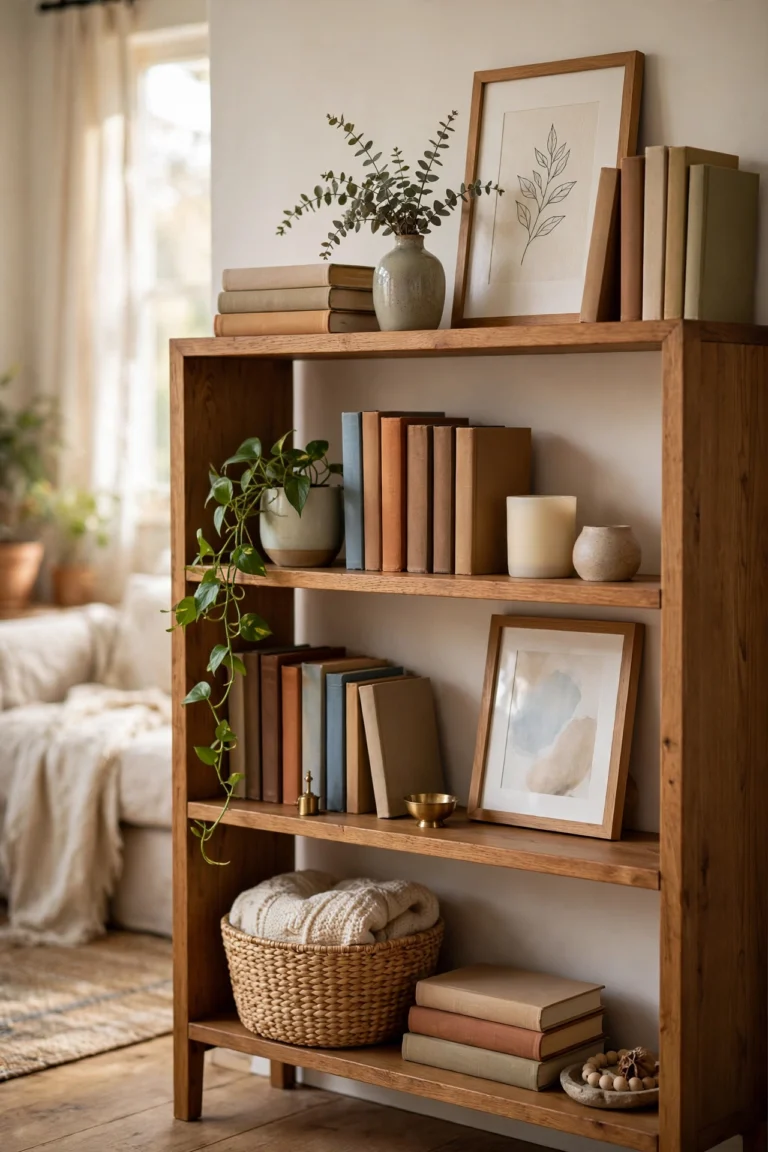
Pull everything off, then restyle: books grouped vertically and horizontally, a small object or plant per shelf, and breathing room between items. The “edit” costs nothing and reads as high-end restraint.
15. Keep the Palette Tight
Three to four colors, repeated around the room, is the difference between “collected” and “chaotic.” Choose a base (cream or gray), a warm accent, and one deep tone, then carry them through pillows, throws, art, and accessories.
16. Fix the Small Details
Replace mismatched switch plates, tighten wobbly furniture, and touch up scuffed baseboards. Luxury is mostly the absence of the things that whisper “neglected.”
The Takeaway
An expensive-looking living room isn’t about one splurge — it’s about light, scale, texture, and editing. Start with the free moves (hang curtains higher, edit the shelves, add symmetry), then spend where it counts: the rug, the lighting, and one tactile accent. Your guests won’t know the budget. They’ll only feel the room.